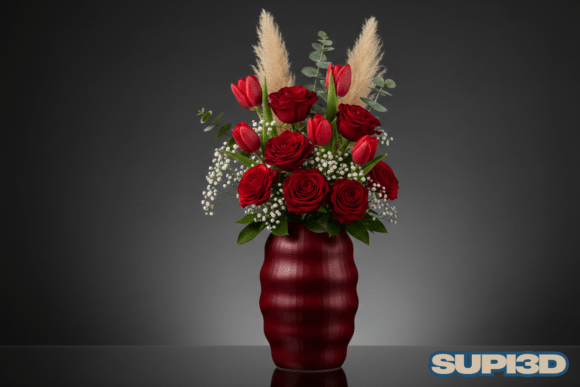
3D Luxury Vase 043: Integrating Digital Design into Physical Home Décor Workflows
The intersection of digital fabrication and interior design has created a new category of creative workflows where planning, execution, and aesthetic refinement are deeply intertwined. For professionals in architecture, interior styling, and product design, the ability to prototype physical objects digitally before committing to material costs is no longer a luxury—it is a standard operational procedure. Within this ecosystem, 3D Luxury Vase 043 represents a specific asset class: a high-fidelity digital STL file designed for elegant, timeless home décor. This article explores how this particular 3D model fits into broader creative processes, from initial concept development to final physical realization.
Understanding the Asset: From Binary Code to Physical Form
Before integrating any digital asset into a workflow, it is essential to understand its technical parameters and limitations. 3D Luxury Vase 043 is not a physical object; it is a vector-based mesh delivered as an STL (Stereolithography) file. This distinction is critical for project management. The file contains geometric data defining the vase’s sculptural form and clean lines, but it lacks color, texture, or material properties until processed through slicing software and printed.
The primary value proposition of this asset lies in its scalability. Unlike purchasing a fixed-size physical vase, an STL file allows for infinite dimensional adjustment without loss of detail. This feature transforms the vase from a static decorative item into a flexible component of a design system. Whether you are working on a tight residential project requiring subtle accents or a commercial space demanding statement pieces, the model adapts to your spatial constraints. This flexibility reduces the friction in the design phase, allowing for rapid iteration on scale and proportion.
Integration into Interior Design and Styling Workflows
For interior designers and stylists, the inclusion of 3D Luxury Vase 043 offers significant advantages in client presentation and spatial planning. Traditional workflows often involve sourcing physical samples, which can be time-consuming and costly. By utilizing a scalable digital model, designers can integrate the vase into 3D room renderings early in the conceptual phase.
Pre-Production Planning and Visualization
During the pre-production stage, the STL file can be imported into CAD (Computer-Aided Design) or BIM (Building Information Modeling) software. This allows for precise placement within a virtual environment. Designers can test how the vase interacts with lighting, other furniture pieces, and architectural elements. The clean lines and sculptural nature of the design make it particularly effective in modern and classic interiors alike, providing a neutral yet sophisticated anchor point for visual compositions.
This approach enables clients to visualize the final outcome before any physical production begins. It minimizes the risk of mismatched aesthetics and ensures that the chosen piece complements the existing decor style. Furthermore, because the model is fully scalable, designers can present multiple size options to clients, demonstrating how the same design can serve different functional roles—such as holding dried flowers in a hallway versus serving as a centerpiece on a dining table.
Operational Considerations for Digital Fabrication
Once the decision is made to produce the 3D Luxury Vase 043, the workflow shifts from digital visualization to physical implementation. This transition requires careful attention to preparation, compatibility, and quality control. The user assumes responsibility for printing settings and material choice, which directly impacts the final result.
- Material Selection: The aesthetic outcome depends heavily on the chosen filament or resin. For a "luxury" feel, matte finishes in neutral tones often enhance the sculptural qualities of the vase. Glossy resins may highlight the clean lines but can also emphasize layer lines if print resolution is insufficient.
- Print Resolution: To maintain the integrity of the fine details, higher layer heights (e.g., 0.1mm or lower) are recommended. This ensures that the transition between the base and the body of the vase remains smooth and refined.
- Post-Processing: Depending on the printer technology used (FDM vs. SLA), post-processing steps such as sanding, priming, or painting may be necessary to achieve a professional-grade finish. This step is crucial for transforming a raw 3D print into a piece of home décor worthy of display.
Strategic Use Cases for Creators and Entrepreneurs
For freelancers, small business owners, and content creators, 3D Luxury Vase 043 serves as more than just a decorative item; it is a versatile tool for brand building and content creation.
Content Production and Social Media
In the realm of digital marketing and blogging, high-quality visuals are paramount. Owning a unique, custom-sized vase allows creators to produce distinctive content that stands out in crowded social media feeds. The versatility of the design means it can be styled in numerous ways—filled with artificial arrangements for low-maintenance aesthetics, or left empty to showcase its form against minimalist backgrounds. This adaptability supports a consistent content strategy across various platforms, from Instagram to Pinterest.
E-commerce and Product Development
Entrepreneurs in the home goods sector can leverage this STL file to test market demand without the overhead of inventory. By offering limited-run, custom-sized versions of the vase, businesses can cater to niche markets seeking personalized décor. The digital nature of the product eliminates shipping complexities associated with fragile ceramics, allowing for a direct-to-consumer model focused on local or regional printing partnerships.
Long-Term Value and Sustainability
Integrating digital assets like 3D Luxury Vase 043 into personal or professional routines aligns with sustainable practices. On-demand printing reduces waste associated with mass manufacturing and unsold inventory. Additionally, the durability of 3D-printed materials often exceeds that of traditional ceramics, making the vase a long-term investment rather than a disposable item.
Furthermore, the ownership of the STL file grants perpetual access to the design. Users can re-print the vase in different colors or sizes as their tastes evolve or as new projects arise. This longevity contrasts with the linear consumption model of traditional retail, offering a more dynamic relationship between the consumer and their environment.
Conclusion: Streamlining the Creative Process
The adoption of 3D Luxury Vase 043 exemplifies the shift towards agile, digital-first approaches in home décor and design. By understanding the technical specifications and strategic applications of this STL file, users can streamline their workflows from concept to completion. Whether used for enhancing interior spaces, supporting content creation, or exploring entrepreneurial opportunities, the vase offers a blend of elegance, versatility, and practical efficiency. As digital fabrication continues to mature, assets like this will play an increasingly central role in how we plan, create, and inhabit our physical environments.
For those looking to implement this solution, the key lies in thoughtful preparation and attention to detail during the printing phase. By treating the STL file as a foundational element of a larger design process, users can unlock its full potential and achieve results that are both aesthetically pleasing and functionally robust.