Welcome Card Design, 3D Shadow Box
If you have ever struggled to create a greeting card that truly stands out on a shelf or in a mailbox, you are not alone. In a world dominated by digital notifications, a physical, tangible object carries a weight of intention and care that screens simply cannot replicate. This is where the Welcome Card Design, 3D Shadow Box becomes an essential tool for anyone looking to elevate their paper crafting game. Specifically, the butterfly-themed variation offers a delicate, elegant aesthetic that appeals to a wide range of recipients, from new homeowners to wedding guests.
Creating intricate three-dimensional paper art used to require years of practice with precision knives and steady hands. However, modern digital templates have democratized this craft. By utilizing high-quality vector files, you can achieve professional-grade results without needing to be a master artist. The specific design we are discussing combines the structural complexity of a shadow box with the organic beauty of a butterfly motif, resulting in a layered masterpiece that invites interaction.
Understanding the Appeal of Layered Paper Art
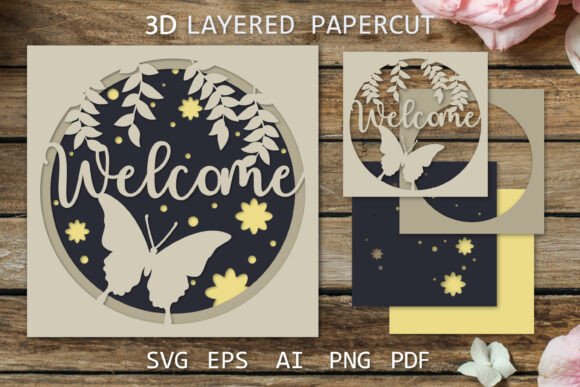
A shadow box card differs significantly from a standard folded card. Instead of lying flat, it utilizes multiple layers of cardstock cut at varying depths to create depth and perspective. When opened, the card transforms into a small diorama. For the butterfly design, this means you might see a background layer representing a garden or sky, a middle layer featuring foliage or architectural elements, and foreground layers showcasing the butterflies themselves. This layering technique creates a sense of movement and realism that flat illustrations cannot match.
The appeal lies in the "reveal." As the recipient opens the card, they are greeted with a sudden burst of dimensionality. It feels like opening a window into another scene. For creators, the satisfaction comes from assembling these pieces. Even if you are using a cutting machine like Cricut or Silhouette, the assembly process requires patience and attention to detail, making it a rewarding mindfulness activity. The final product is not just a message; it is a keepsake.
Technical Advantages of Vector-Based Templates
One of the most critical aspects of this digital product is its file format. The template is provided as a comprehensive ZIP file containing various formats, including EPS10, AI, PDF, PNG, and SVG. Why does this matter? Because vector files allow for infinite scalability without loss of quality. Whether you want to print a tiny accent piece or a large statement card, the edges remain crisp and clean.
The inclusion of separated layers is particularly valuable. In the PDF and PNG files, the colored layers are distinct from the black outline layers. This separation gives you total control over your design choices. You are not locked into the default color scheme. If you are creating a welcome card for a baby shower, you might swap the traditional colors for soft pastels. For a corporate welcome kit, you might adjust the hues to match your brand’s palette. The ability to change sizes and colors easily means one purchase can serve multiple projects.
- Resolution Flexibility: With files formatted at 3000x3000 pixels, you ensure high-resolution output suitable for both home printers and professional print shops.
- Transparency Support: The PNG files feature transparent backgrounds, which makes it easier to composite the butterfly elements into other digital designs or print them cleanly on different colored cardstocks.
- Software Compatibility: The variety of formats ensures that whether you use Adobe Illustrator, CorelDRAW, or free alternatives like Inkscape, you can access the necessary tools to edit the design.
Practical Applications and Use Cases
While the primary use case is obviously greeting cards, the versatility of this Welcome Card Design, 3D Shadow Box extends further. Small business owners often look for unique ways to thank customers. Including a handmade-style shadow box card in a package adds a personal touch that encourages social media sharing. A customer is far more likely to post a photo of a stunning 3D card than a plain envelope, providing free marketing for your brand.
Educators and hobbyists can also find value here. For older children or teenagers learning about geometry and spatial reasoning, assembling these layers serves as a practical application of those concepts. It teaches precision, alignment, and the importance of following instructions while allowing for creative expression through color selection.
Furthermore, bloggers and content creators can use the high-resolution raster images (PNGs) for digital invitations or website headers. Although the physical card is the main focus, the visual assets can be repurposed to maintain a consistent aesthetic across digital platforms. This dual utility maximizes the return on investment for the template.
Getting Started: What You Need to Know
Before diving into your first project, there are a few practical considerations to keep in mind. First, ensure you have the right software to open the files. While SVG and PNG files are widely supported, AI and EPS10 files may require Adobe Creative Cloud applications or compatible third-party software. If you are a beginner, starting with the SVG or PNG files might be less intimidating.
You will also need a cutting machine for the best results, although hand-cutting is possible with extreme patience. Machines like Cricut or Silhouette handle the intricate details of the butterfly wings much more consistently than manual cutting. Additionally, consider the type of paper you use. Heavier cardstock, typically between 80lb and 110lb, holds the structure of the shadow box better than thin paper. Thinner papers may buckle under the weight of multiple layers or fail to stand upright when the card is opened.
Assembly requires a good adhesive. Glue dots or double-sided tape work well for attaching layers because they provide hold without warping the paper. Liquid glues should be applied sparingly to avoid seeping through thin areas. Take your time during the assembly phase; rushing can lead to misaligned layers, which detracts from the 3D effect.
Why This Design Stands Out
The butterfly motif is timeless. Butterflies symbolize transformation, growth, and new beginnings, making them perfect for welcome cards. Whether welcoming a new neighbor, a new employee, or a new chapter in life, the imagery resonates emotionally. The combination of this symbolic meaning with the technical sophistication of a shadow box creates a product that feels both heartfelt and impressive.
By choosing a digital template over a pre-made store-bought card, you inject your own personality into the gift. You choose the colors, the paper texture, and even the handwriting style of the accompanying note. This level of customization is what separates a generic gesture from a memorable experience. The Welcome Card Design, 3D Shadow Box provides the framework, but your creativity provides the soul.
In summary, this resource is ideal for crafters who want to produce high-quality, personalized items without starting from scratch. It bridges the gap between amateur enthusiasm and professional presentation. By leveraging the power of vector graphics and layered design, you can create stunning 3D cards that delight recipients and showcase your artistic effort. Extract the ZIP file, select your preferred format, and begin crafting something truly special today.