Lighthouse 3D Printable Model
The landscape of personal fabrication has shifted dramatically in recent years. What was once a niche hobby reserved for engineers and tinkerers has evolved into a mainstream creative outlet, driven by the accessibility of desktop manufacturing technology. At the heart of this shift is not just the hardware—the printers themselves—but the digital assets that bring them to life. Among the most enduring symbols of coastal heritage and maritime history is the lighthouse, a structure that represents both safety and isolation. Today, the Lighthouse 3D Printable Model offers creators, designers, and hobbyists a unique opportunity to capture this iconic imagery in tangible form. It is more than just a decorative object; it is a testament to the precision of modern additive manufacturing and the growing demand for high-quality, ready-to-print STL files.
The Appeal of Iconic Architecture in Miniature Form
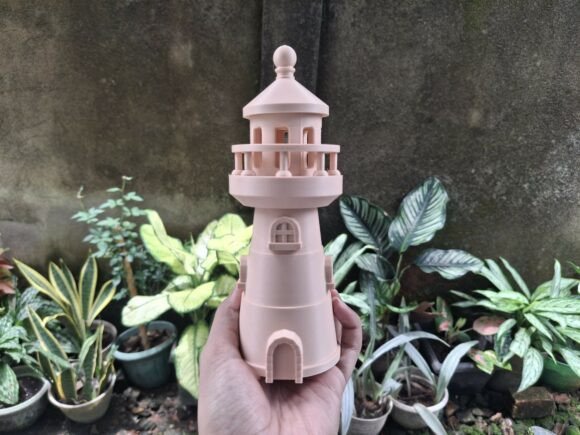
Why choose a lighthouse? The answer lies in its universal recognition and aesthetic versatility. A lighthouse is instantly recognizable, evoking feelings of warmth, guidance, and serene coastal charm. For professionals working in interior design, set decoration, or educational content creation, having access to a stylized yet accurate miniature version of such a structure adds significant value. The Lighthouse 3D Printable STL Model described here brings a warm coastal charm to your 3D prints with its beautifully stylized tower design. Unlike complex, hyper-realistic scans that may require extensive post-processing, this model is designed with smooth curves, clean silhouettes, and charming architectural details.
This balance between artistic stylization and structural accuracy makes it an ideal candidate for various applications. Whether you are building a diorama for a historical display, creating a miniature prop for a film project, or simply looking for a sophisticated desk decoration, this model fits seamlessly into diverse workflows. The clean lines ensure that even at small scales, the print retains its visual integrity, avoiding the "mushy" look that often plagues poorly optimized models. For marketers and bloggers focusing on home decor trends, showcasing such a piece can resonate with audiences seeking unique, handmade-style aesthetics without the artisanal price tag.
Technical Specifications and File Compatibility
In the realm of 3D printing, file format compatibility is crucial for efficiency. Creators today expect flexibility, wanting to choose their preferred slicer software based on their specific workflow needs. This model addresses that requirement directly by including both an STL file and a 3MF file ready to slice. The inclusion of the 3MF format is particularly noteworthy for users of modern ecosystems like Bambu Studio, as it preserves material assignments, support structures, and other metadata more effectively than the older STL standard.
The physical dimensions of the model are carefully considered for practicality. Measuring approximately X: 7 cm, Y: 7.48 cm, and Z: 18.7 cm, the lighthouse strikes a perfect balance between being a substantial display piece and something that fits comfortably on standard workspaces or shelves. Its vertical orientation highlights the tapering architecture typical of real-world lighthouses, allowing for dramatic lighting effects when used as a lamp base or accent light diffuser. For educators and freelancers who frequently travel or need compact storage solutions, these manageable dimensions make it easy to archive multiple designs or transport them for live demonstrations.
Printability and Material Considerations
A model is only as good as its ability to be printed successfully. Many downloadable assets suffer from poor topology, leading to failed prints, excessive support waste, or weak structural joints. To mitigate these risks, this Lighthouse 3D Printable Model has been rigorously tested. Successful test prints were conducted using the Bambu Lab A1 Mini, a popular entry-level yet highly capable printer known for its reliability and ease of use. Using eSUN PLA Plus filament provided excellent layer adhesion and surface finish, resulting in a vibrant and durable final product.
However, potential printers should note that supports are required for this geometry. The overhanging roof sections and balcony details necessitate temporary scaffolding during the print process. While this adds a minor step in post-processing, it ensures that the intricate details remain sharp and undistorted. Furthermore, because the model is composed of multiple parts (implied by the instruction to use glue for assembly), users must plan their build plate strategy carefully. This multi-part approach allows for better control over individual components, such as painting the lantern room differently from the main tower, catering to customizers who enjoy color-blocking techniques.
Optimized Print Settings for Consistent Results
To help users achieve professional-grade results right out of the box, specific print settings have been validated. These recommendations serve as a solid baseline, though adjustments may be needed based on individual printer calibrations and environmental conditions. Below is a summary of the proven configuration:
- Printer: Bambu Lab A1 Mini or similar FDM printers with a 0.4 mm nozzle.
- Slicer Software: Bambu Studio or equivalent (Cura, PrusaSlicer).
- Nozzle Size: 0.4 mm (standard for balancing speed and detail).
- Layer Height: 0.20 mm (provides a good balance between surface smoothness and print time).
- Wall Loops: 3 (ensures structural strength and reduces visibility of internal infill).
- Sparse Infill: 10% (sufficient for a lightweight decorative item while saving material).
- Print Speed: 50 mm/s (optimized for quality over raw speed, ensuring precise corner definition).
- Supports: Required, particularly under the roof and balcony areas.
For entrepreneurs and business owners in the maker space, sharing such detailed settings builds trust and reduces customer support inquiries. It demonstrates a commitment to user success rather than just selling a file. Educators can also use these settings as a teaching tool, explaining how parameters like wall loops and infill density affect the mechanical properties and appearance of the final object.
Assembly and Post-Processing Techniques
Once the printing phase is complete, the assembly process begins. The instructions specify the use of glue to assemble the parts. Standard cyanoacrylate (super glue) or plastic cement works well for PLA and PETG filaments. Care should be taken to align the pieces accurately before the adhesive sets, as the lighthouse’s symmetry is key to its aesthetic appeal. After assembly, sanding any visible support marks or layer lines can further enhance the smooth curves mentioned in the design description.
This stage offers significant creative freedom. Hobbyists might choose to paint the tower in traditional red-and-white stripes, while others might experiment with metallic finishes or weathered textures to simulate age and exposure to salt air. For bloggers and content creators, this customization potential provides endless opportunities for tutorial videos and before-and-after showcases. The modular nature of the print encourages experimentation, allowing users to swap out the lantern room or change the base color without reprinting the entire structure.
Broader Implications for the Creative Economy
The availability of high-quality, pre-tested models like this lighthouse reflects a broader trend in the creator economy: the democratization of design. Professionals no longer need to hire expensive industrial designers for every small project. Instead, they can leverage existing libraries of verified assets, saving time and reducing overhead. This is particularly relevant for small businesses and solo practitioners who need to produce prototypes, marketing props, or custom gifts quickly.
Moreover, the focus on "warm coastal charm" speaks to current lifestyle shifts toward biophilic design and nostalgia. In an increasingly digital world, people crave tactile, nature-inspired objects that ground them in physical reality. A 3D-printed lighthouse serves as a bridge between digital innovation and traditional craftsmanship. It allows the user to participate in the creation process, fostering a deeper connection to the object than mass-produced alternatives ever could.
As we look forward, the integration of AI-assisted design and automated slicing will likely make models like this even more accessible. However, the human element—choosing the right filament, tweaking settings, and adding personal touches—will remain central to the experience. The Lighthouse 3D Printable Model stands as a prime example of how thoughtful design, combined with robust technical documentation, can empower a wide range of users, from casual hobbyists to seasoned professionals, to bring their visions to life with confidence and clarity.