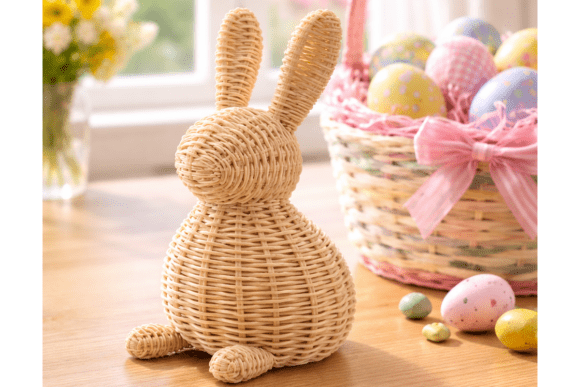
Wicker Rabbit STL 3D Model for Easy 3D Printing: A Comprehensive Guide to Customization and Creation
The intersection of digital design and physical manufacturing has opened unprecedented avenues for creativity, allowing hobbyists and professionals alike to bring intricate virtual concepts into the tangible world. Among the diverse array of models available for download, the Wicker Rabbit STL 3D Model for Easy 3D Printing stands out as a particularly versatile option. This model is not merely a static object but a canvas for personal expression, offering a blend of organic texture and recognizable form that appeals to a wide spectrum of users. Whether you are looking to enhance your home decor, create a meaningful gift, or experiment with advanced printing techniques, this guide explores the full potential of this unique file.
Understanding the nuances of 3D printing requires more than just loading a file onto a printer; it involves a deep appreciation for material properties, slicer settings, and artistic intent. The wicker rabbit, with its complex lattice-like structure, serves as an excellent test bed for these skills while delivering impressive aesthetic results. By delving into the specifics of customization, material selection, and practical application, we can uncover why this particular STL file has become a favorite among enthusiasts seeking both challenge and reward in their print jobs.
The Appeal of Intricate Geometry in Desktop Art
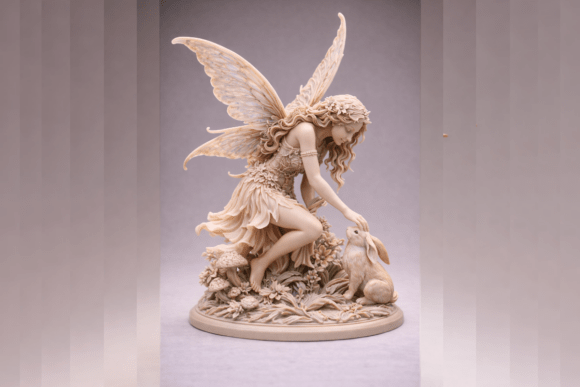
At first glance, the visual charm of a wicker rabbit lies in its ability to mimic natural weaving patterns through digital geometry. Unlike solid objects, which often rely on smooth surfaces and bold shapes, the wicker design introduces a level of complexity that engages the viewer’s eye. The interlaced strands create shadows and depth, giving the model a sense of lightness despite being made of dense filament. This characteristic makes it an ideal candidate for display pieces where detail is paramount.
For educators and researchers in fields such as computer-aided design (CAD) and additive manufacturing, the Wicker Rabbit STL 3D Model for Easy 3D Printing offers a practical case study in mesh optimization. The file must balance structural integrity with visual fidelity, ensuring that the thin "strands" of the wicker pattern do not collapse during printing. This balance is achieved through careful layer height adjustments and support strategy, making the model an educational tool for understanding how digital parameters translate to physical strength.
Furthermore, the organic nature of the design bridges the gap between traditional craft and modern technology. In a world increasingly dominated by sleek, minimalist aesthetics, the rustic and handcrafted look of wicker provides a warm, inviting contrast. It taps into a nostalgic sensibility, reminiscent of Easter decorations or vintage garden ornaments, yet it is born entirely from code. This fusion of old-world charm with new-world fabrication methods is what gives the model its enduring appeal across different demographics, from young students learning to slice files to seasoned collectors curating shelves of unique artifacts.
Material Selection and Color Strategies
One of the most significant advantages of using a 3D printable STL file is the freedom to choose materials that align with the desired outcome. The default color of the printed object will inherently depend on the filament selected, but the possibilities extend far beyond standard white or black PLA. For those aiming for a classic, earthy look, natural-colored PLA or PETG can replicate the appearance of dried grass or straw effectively. These materials offer good layer adhesion and minimal warping, which is crucial for maintaining the fine details of the wicker weave.
However, the creative scope expands dramatically when considering alternative materials. If the goal is to produce a statement piece, printing the Wicker Rabbit STL 3D Model for Easy 3D Printing in gold or silver PLA can transform the figurine into a trophy-like object. The reflective quality of metallic filaments catches the light along the edges of the woven strands, highlighting the intricate geometry in a way that matte finishes cannot. Similarly, using translucent resin or clear PLA allows light to pass through the gaps in the weave, creating beautiful shadow patterns when placed near a window or illuminated by an LED base.
Color customization does not stop at the choice of filament. Modern 3D slicer software provides robust tools for introducing multi-color effects without requiring dual-extrusion hardware. Users can employ techniques such as pausing prints at specific layers to swap filaments or utilizing gradient effects by blending colors within the slicer’s color mapping features. For instance, a gradient from soft pastel pink to vibrant purple could turn the rabbit into a whimsical toy for children, while a monochromatic scheme might lend itself to a sophisticated office desk accessory. It is important to note, however, that over-colorization can sometimes obscure the delicate details of the model. Strategic use of contrasting colors—such as a dark base with light highlights—can help accentuate the three-dimensional nature of the weave rather than flattening it visually.
Scaling and Proportional Adjustments
The scalability of the Wicker Rabbit STL 3D Model for Easy 3D Printing is another factor that contributes to its versatility. While the original file may be designed for a specific size range, the nature of STL files allows for non-destructive scaling directly within slicing software. This feature enables users to adapt the model to various spatial constraints and display preferences.
For desktop enthusiasts, a small-scale version, perhaps ranging from 5 to 10 centimeters in height, serves as an excellent showpiece. These compact versions require less material and print time, making them accessible for quick projects or classroom demonstrations. They are perfect for adding a touch of personality to workspaces, bookshelves, or windowsills. Conversely, larger scales open up new possibilities for grander displays. A statue sized for a living room mantel or a garden niche can command attention and serve as a focal point in interior design. When scaling up, it is essential to consider the structural implications; larger prints may benefit from increased infill density or additional supports to prevent sagging in the unsupported spans of the wicker pattern.
Adjusting the size also affects the perception of detail. On smaller prints, extremely fine strands might fuse together due to extrusion tolerances, potentially losing the airy feel of the wicker. On larger prints, the individual elements become more pronounced, enhancing the tactile and visual experience. Therefore, finding the right scale is a matter of balancing the printer’s resolution capabilities with the intended viewing distance. Experimentation is key; trying out a test print at a medium size before committing to a large-scale project can help refine expectations regarding detail retention and print success rates.
Practical Applications and Gifting Potential
Beyond its aesthetic value, the wicker rabbit holds significant practical applications in various contexts. As a gift item, it offers a high degree of personalization, which is often valued more than the object itself. Because the model can be customized in color, size, and even surface finish, it becomes a bespoke present tailored to the recipient’s tastes. Imagine gifting a friend a wicker rabbit printed in their favorite color, or creating a custom-sized version to fit perfectly on their child’s nightstand. The effort invested in selecting and preparing the print adds sentimental weight, transforming a mass-produced concept into a one-of-a-kind keepsake.
In educational settings, this model can facilitate discussions about geometry, topology, and the history of basketry. Teachers can use the print to demonstrate how mathematical algorithms can simulate natural textures, providing a concrete example of abstract concepts. Students can engage with the file by analyzing its polygon count, experimenting with different infill patterns to see how they affect flexibility and durability, or even modifying the source mesh to alter the weave pattern. This hands-on approach fosters a deeper understanding of digital fabrication processes.
For businesses, particularly those in the retail or hospitality sectors, custom-branded wicker rabbits could serve as unique promotional items or decorative elements. A café might use them as table centerpieces, while a tech company could incorporate them into office decor to signal a commitment to innovation and creativity. The novelty of a 3D-printed object often sparks conversation, making it an effective icebreaker in professional environments. Additionally, the ability to produce these items on-demand reduces inventory costs and waste, aligning with sustainable business practices.
Technical Considerations for Successful Printing
To achieve the best results with the Wicker Rabbit STL 3D Model for Easy 3D Printing, certain technical considerations must be addressed. First and foremost is the orientation of the model on the build plate. Printing the rabbit upright ensures that the weight of the object is distributed evenly, minimizing the need for extensive support structures. However, depending on the specific design of the wicker pattern, slight tilting might reduce visible layer lines on curved surfaces, enhancing the smoothness of the outer shell.
Support structures are critical for preventing the delicate strands from drooping or breaking. Using tree-style supports can be particularly effective, as they branch out to meet the model at multiple points, reducing contact area and making post-processing easier. After printing, removing these supports requires patience and precision to avoid damaging the fragile weave. Tools like needle-nose pliers or sharp tweezers can assist in carefully detaching support remnants from tight spaces.
Print speed and temperature settings also play a vital role. Slower print speeds allow for better cooling and more precise deposition of filament, which is essential for capturing fine details. Increasing the fan speed helps solidify each layer quickly, preventing heat buildup that could cause warping or deformation. Additionally, ensuring that the nozzle diameter matches the level of detail required is crucial; a 0.4mm nozzle is generally suitable, but a 0.2mm nozzle can yield sharper definitions if the printer is capable of maintaining accuracy at higher resolutions.
Conclusion
The Wicker Rabbit STL 3D Model for Easy 3D Printing represents more than just a fun project; it is a testament to the power of digital craftsmanship. By leveraging the flexibility of 3D printing technology, users can explore a vast landscape of creative possibilities, from simple desktop trinkets to elaborate art installations. The model’s inherent design encourages experimentation with materials, colors, and scales, fostering a deeper engagement with the printing process. Whether used for educational purposes, personal enjoyment, or commercial application, the wicker rabbit serves as a reminder that technology, when wielded with creativity, can produce objects of beauty and meaning. As the community of makers continues to grow, models like this will undoubtedly inspire new innovations and shared experiences in the realm of additive manufacturing.