Unlocking Precision: A Comprehensive Guide to the Vase 2 Stl 3d Print File
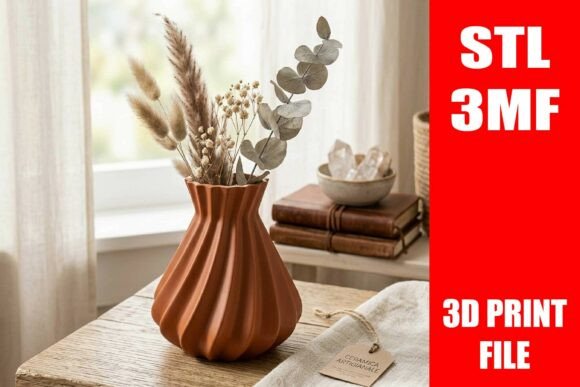
The landscape of additive manufacturing has evolved dramatically over the last decade, shifting from prototyping industrial parts to enabling intricate artistic expression and functional design for everyday consumers. At the heart of this revolution is the digital asset—a file that serves as the blueprint for physical creation. Among the most sought-after digital assets in the community is the Vase 2 Stl 3d Print File. This specific STL file represents more than just a decorative object; it is a testament to the capabilities of modern 3D modeling software and the precision required for successful printing.
For professionals, hobbyists, and educators alike, understanding the nuances of downloading and utilizing high-quality STL files is crucial. The Vase 2 model stands out due to its clean geometry and error-free structure, designed specifically to leverage the capabilities of contemporary printers like the Bambu Lab A1 Mini. This article explores the technical specifications, practical applications, and the broader implications of using such optimized digital downloads in both personal and professional workflows.
The Anatomy of a High-Quality Digital Download
When evaluating a digital asset for 3D printing, not all files are created equal. The difference between a frustrating print failure and a flawless final product often lies in the quality of the source file. The Vase 2 Stl 3d Print File is engineered with "clean, high-quality geometry," a phrase that carries significant weight in the 3D printing community. But what does this actually mean for the end-user?
In the context of STL (Stereolithography) files, geometry refers to the mesh—the collection of vertices, edges, and faces that define the shape of the object. Professional-grade models are created using advanced CAD (Computer-Aided Design) or sculpting software, ensuring that every surface is mathematically sound. This process eliminates common issues such as non-manifold edges, inverted normals, and intersecting triangles, which can cause slicing software to fail or produce artifacts on the final print.
The emphasis on being "error-free" is particularly important for complex designs like vases. These objects often feature continuous spirals, varying wall thicknesses, or delicate lattice structures. If the underlying geometry contains even minor errors, the slicer may misinterpret the toolpaths, leading to gaps, over-extrusion, or structural weaknesses. By providing a professionally vetted file, creators ensure that users can focus on the creative aspects of their project rather than troubleshooting technical glitches.
Material Science and Printer Compatibility
One of the standout features of the Vase 2 model is its validation through real-world testing. The description notes that the file was tested using PLA on a Bambu Lab A1 Mini. This detail is critical for potential buyers who want to know if the design will work with their specific setup. While many digital downloads claim compatibility across various machines, specific testing provides a layer of trust and reliability.
Why PLA Remains the Gold Standard
PolyLactic Acid (PLA) is perhaps the most popular material for FDM (Fused Deposition Modeling) 3D printing. It is biodegradable, easy to print, and available in a vast array of colors. For a decorative item like a vase, PLA offers excellent dimensional stability and a smooth finish. However, its limitations—such as lower heat resistance and brittleness compared to engineering plastics—make it ideal for indoor decor but less suitable for outdoor or high-stress applications.
The choice to test with PLA suggests that the Vase 2 model is optimized for aesthetic appeal and ease of use. The smooth flow of PLA allows the printer to render fine details without clogging, making it perfect for the potentially intricate surfaces found in this design.
The Role of Modern Hardware
Mentioning the Bambu Lab A1 Mini highlights the importance of hardware in achieving high-quality results. The A1 Mini is known for its speed, accuracy, and user-friendly interface. It utilizes a core XY kinematic system, which reduces moving mass and allows for faster acceleration without sacrificing precision. When a digital file is tested on such capable hardware, it ensures that the design’s finest details are captured accurately. For users with different printers, this testing serves as a benchmark; if the design prints well on a high-performance machine, it is likely to be robust enough for mid-range consumer devices, provided settings are adjusted appropriately.
Practical Applications and Use Cases
The versatility of the Vase 2 Stl 3d Print File extends beyond simple decoration. Its design lends itself to a variety of applications across different sectors, demonstrating the broad utility of well-designed 3D assets.
- Home Decor and Interior Design: The primary use case is obvious—a vase for holding flowers, dried plants, or standalone display. The clean geometry allows for unique textural effects that traditional manufacturing methods might struggle to achieve cost-effectively.
- Educational Tools: Educators in STEM fields can use this file to teach students about digital fabrication, mesh repair, and slicing parameters. It serves as an excellent example of how a digital concept translates into a physical object.
- Event Planning: For weddings, parties, or corporate events, custom-printed vases offer a personalized touch. Businesses can bulk-order digital files and print locally, reducing shipping costs and lead times compared to ordering physical goods from overseas manufacturers.
- Prototyping and Inspiration: Industrial designers might use the vase as a starting point for other projects. The principles of spiral generation and volume calculation used in the Vase 2 model can be applied to lampshades, planters, or acoustic diffusers.
The Workflow: From Download to Finished Product
Understanding the workflow associated with a digital download is essential for maximizing the value of the purchase. The process typically involves several steps, each requiring attention to detail.
- Acquisition and Verification: Upon purchasing the Vase 2 Stl 3d Print File, users receive a digital link. It is crucial to verify the integrity of the file by opening it in a 3D viewer to ensure there are no visible artifacts before proceeding to slicing.
- Slicing Preparation: The STL file is imported into slicing software (such as OrcaSlicer, PrusaSlicer, or Bambu Studio). Here, users adjust layer height, infill density, and support structures. For a vase, supports are often unnecessary if the design relies on a continuous spiral, saving time and material.
- Printer Calibration: Ensuring the printer is properly calibrated—checking bed leveling, extruder flow rate, and temperature—is vital. Even the best file cannot compensate for a poorly maintained machine.
- Printing and Post-Processing: Once the print is complete, minor post-processing may be required, such as removing any residual stringing or sanding rough edges. With a high-quality file like Vase 2, post-processing should be minimal, highlighting the efficiency of the design.
Legal Considerations and Intellectual Property
A critical aspect of purchasing digital assets is understanding the legal framework surrounding them. The statement that "copyright remains with the creator upon purchase" is standard practice in the 3D printing industry. This means that while the buyer owns the physical object they print, they do not own the intellectual property rights to the design itself.
This distinction protects the creativity and labor of the designer. It prevents unauthorized redistribution or commercial exploitation of the file by third parties. For consumers, this ensures that they are supporting original creators directly. For businesses, it is important to review the license terms carefully to determine if the purchased file can be used for commercial production (e.g., selling printed vases) or if it is restricted to personal use only.
Why Choose a Digital Download Over Physical Shipping?
The note that "this is a DIGITAL DOWNLOAD — no physical item will be shipped" addresses a common misconception among new users. There are significant advantages to this model:
- Instant Access: Users can begin printing immediately after purchase, without waiting for shipping logistics.
- Unlimited Reproduction: Once you have the file, you can print as many copies as you need, limited only by your printer's capacity and material supply.
- Customization Potential: While the base file is fixed, having the digital source allows for future modifications if the user has advanced modeling skills, enabling endless variations.
- Environmental Impact: Reducing physical shipping lowers the carbon footprint associated with transportation and packaging.
Conclusion
The Vase 2 Stl 3d Print File exemplifies the intersection of art, technology, and practicality. By offering a clean, professionally tested, and legally protected digital asset, it empowers users to create high-quality physical objects with confidence. Whether you are a seasoned engineer exploring new geometries or a hobbyist looking to add a unique piece to your home, this file provides a reliable foundation for success. As 3D printing technology continues to advance, the importance of high-quality digital libraries will only grow, fostering a culture of innovation and shared knowledge within the global maker community.